

Quick answer
Morning whale watching tours in the Azores consistently offer calmer seas and better visibility than afternoon departures. The Atlantic waters surrounding the archipelago are typically smoothest between 08:00 and 13:00, before afternoon thermal winds develop. Operators recommend the 08:30–14:00 arrival window for optimal conditions, with most morning tours departing between 09:00 and 10:00 to maximize the likelihood of cetacean sightings in settled water.
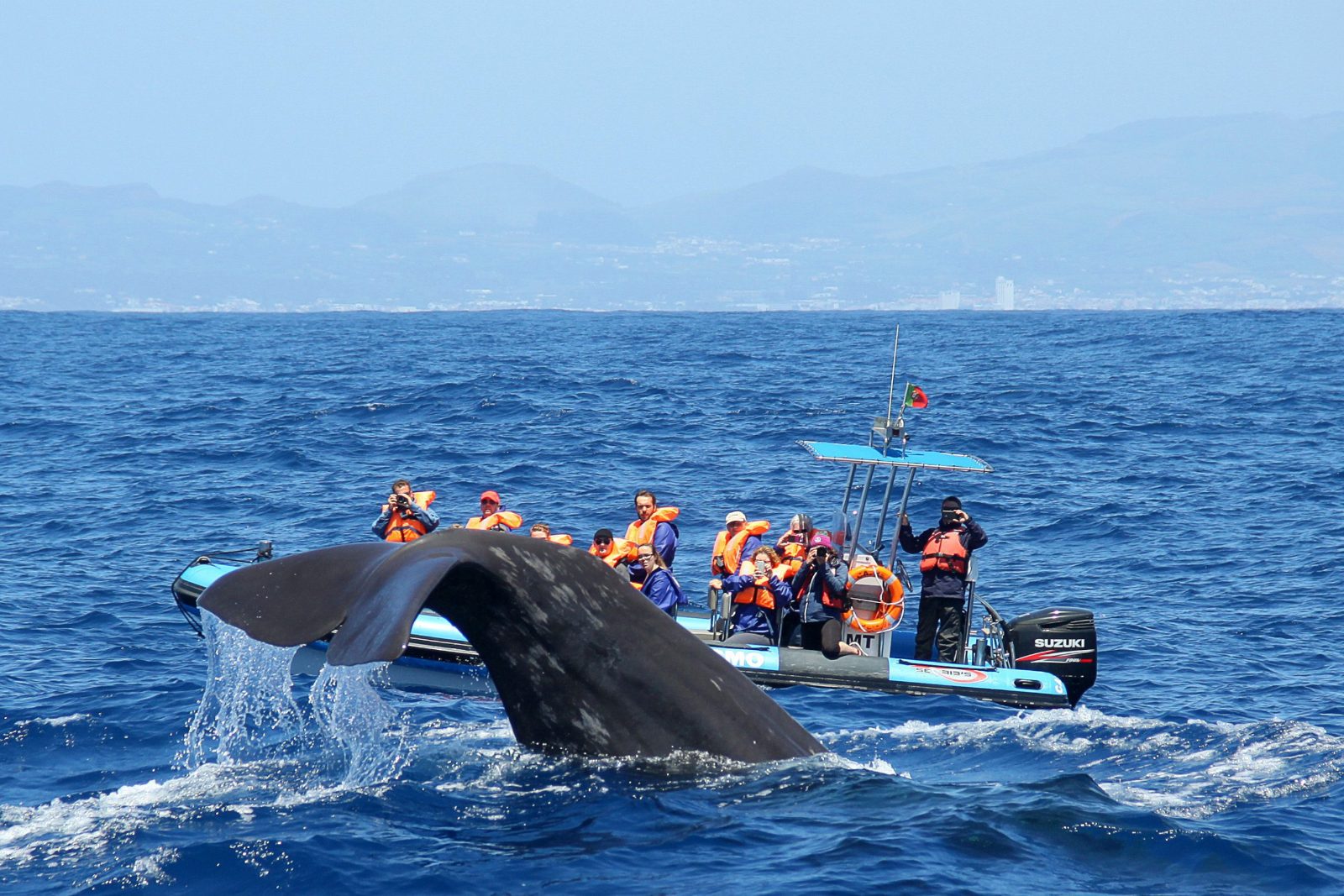
The North Atlantic surrounding the Azores is a migratory highway for sperm whales, fin whales, sei whales, and resident populations of common and bottlenose dolphins. The archipelago's position on the Mid-Atlantic Ridge creates nutrient-rich upwellings that sustain one of the ocean's most concentrated feeding zones, making cetacean encounters possible throughout the year. Sea state is the single most important variable in any offshore excursion. Morning departures benefit from overnight cooling, which suppresses the convective winds that build across the islands each afternoon. By mid-afternoon, thermal gradients between land and ocean generate localized gusts that roughen the surface, reduce underwater visibility, and make smaller species like dolphins harder to track. Tour operators schedule the majority of their departures before noon for this reason, and vigia spotters—land-based lookouts stationed on coastal headlands—report sightings most reliably during the morning window when the surface is glassy and blows are easier to identify from shore. Choosing azores whale watching morning or afternoon depends on more than sea conditions alone. Morning light is sharper and more directional, which improves photography and allows passengers to see detail on breaching animals and dorsal fins. Afternoon sun, while warmer, often produces glare and haze that flatten contrast on the water. Biologists working in the region note that sperm whales, which dive for squid at depths exceeding one thousand meters, surface to breathe in predictable intervals throughout the day, but morning sightings occur in calmer conditions that allow boats to hold position longer and observe behavior without the distraction of swell and chop. Commercial operators running from Ponta Delgada, Horta, and Lajes do Pico maintain radio contact with vigia stations and coordinate departures around real-time sightings. Most tours last between two and three hours and include a marine biologist or naturalist guide. Hydrophones are often deployed to listen for sperm whale clicks and dolphin whistles. No entrance fee applies to the open ocean, but all whale watching activity is conducted through licensed commercial operators under strict regional guidelines that prohibit close approaches and limit the number of vessels per sighting. The Azores remains one of the few places in Europe where deep-diving cetaceans can be observed in their natural pelagic habitat, and the choice between morning and afternoon whale watching tours shapes the quality of that encounter as much as the season or the species present.
“Morning light is sharper and more directional, which improves photography and allows passengers to see detail on breaching animals and dorsal fins.”
Azores Whale Watching Morning or Afternoon: Which Is Better?
Choosing between a morning or afternoon whale watching tour in the Azores depends on your preference for sea stability and environmental conditions. Morning tours generally provide the most stable maritime experience for visitors.
| Morning Afternoon |
Top pick Option 1 Option 2 |
|
|---|---|---|
| Sea conditions | Calmer waters | Choppier waters |
| Visibility | Higher clarity | Lower clarity |
| Likelihood of sightings | Increased probability | Standard probability |
| Activity level | High animal activity | Moderate animal activity |
| Typical group size | Standard capacity | Standard capacity |
Verdict: Travelers seeking the calmest sea conditions and highest visibility should prioritize morning tours.
The Best Arrival Window for Azores Whale Watching Morning or Afternoon
The best arrival window for whale watching in the Azores is 08:30–14:00. During these hours, sea conditions are generally calmer, which improves visibility for spotting marine wildlife.
Spring (April–June)
Moderate crowds15°C–20°C; calmer seas and active migration.
Late spring offers frequent sightings of blue and fin whales.
Summer (July–September)
Peak crowds20°C–25°C; stable conditions, frequent sunshine.
Warmer water temperatures attract diverse cetacean species.
Autumn (October–November)
Low crowds17°C–22°C; variable winds, occasional swells.
Resident species remain present despite cooler temperatures.
Verdict: For the best experience, plan your visit between 08:30 and 14:00 during the spring or summer months.
Essential Preparation for Your Azores Whale Watching Morning or Afternoon
Boat excursions in the Atlantic demand specific preparation for changing marine conditions and extended time on the water.
-
Book your tour 2–3 weeks ahead — Operators fill quickly during peak season, especially morning departures.
-
Check weather and sea conditions — Trips may be rescheduled if swells exceed safe limits for whale spotting.
-
Bring layers and waterproof outer shell — Temperatures drop 5–8°C on open water; spray is common even in calm seas.
-
Pack motion sickness medication if prone — Swells average 1–2 meters; preventive tablets work best taken 30 minutes before departure.
-
Wear non-slip closed shoes with grip — Decks become slippery from sea spray and require stable footing.
-
Apply reef-safe sunscreen 30 minutes early — UV exposure intensifies on water; reapplication is difficult during the tour.
-
Arrive at marina 15 minutes early — Briefings cover safety protocols and current whale migration patterns.
Weekly Hours for Azores Whale Watching Morning or Afternoon
Whale watching operations in the Azores follow a consistent daily schedule to accommodate various tour departures throughout the week.
| Monday | 08:00–18:00 | |
|---|---|---|
| Tuesday | 08:00–18:00 | |
| Wednesday | 08:00–18:00 | |
| Thursday | 08:00–18:00 | |
| Friday | 08:00–18:00 | |
| Saturday | 08:00–18:00 | |
| Sunday | 08:00–18:00 |
Check availability
Frequently Asked Questions About Azores Whale Watching
Everything you need to know about azores whale watching morning or afternoon