

Quick answer
The azores whale watching season operates year-round, with peak activity from April through October when migratory baleen whales pass through the archipelago. Sperm whales remain resident and are spotted in 60-70% of tours across all months. Blue whales and fin whales migrate through in spring (April-May), while sei whales appear late spring through summer. Common dolphins, bottlenose dolphins, and Risso's dolphins are present year-round, though sightings increase during calmer summer sea conditions.
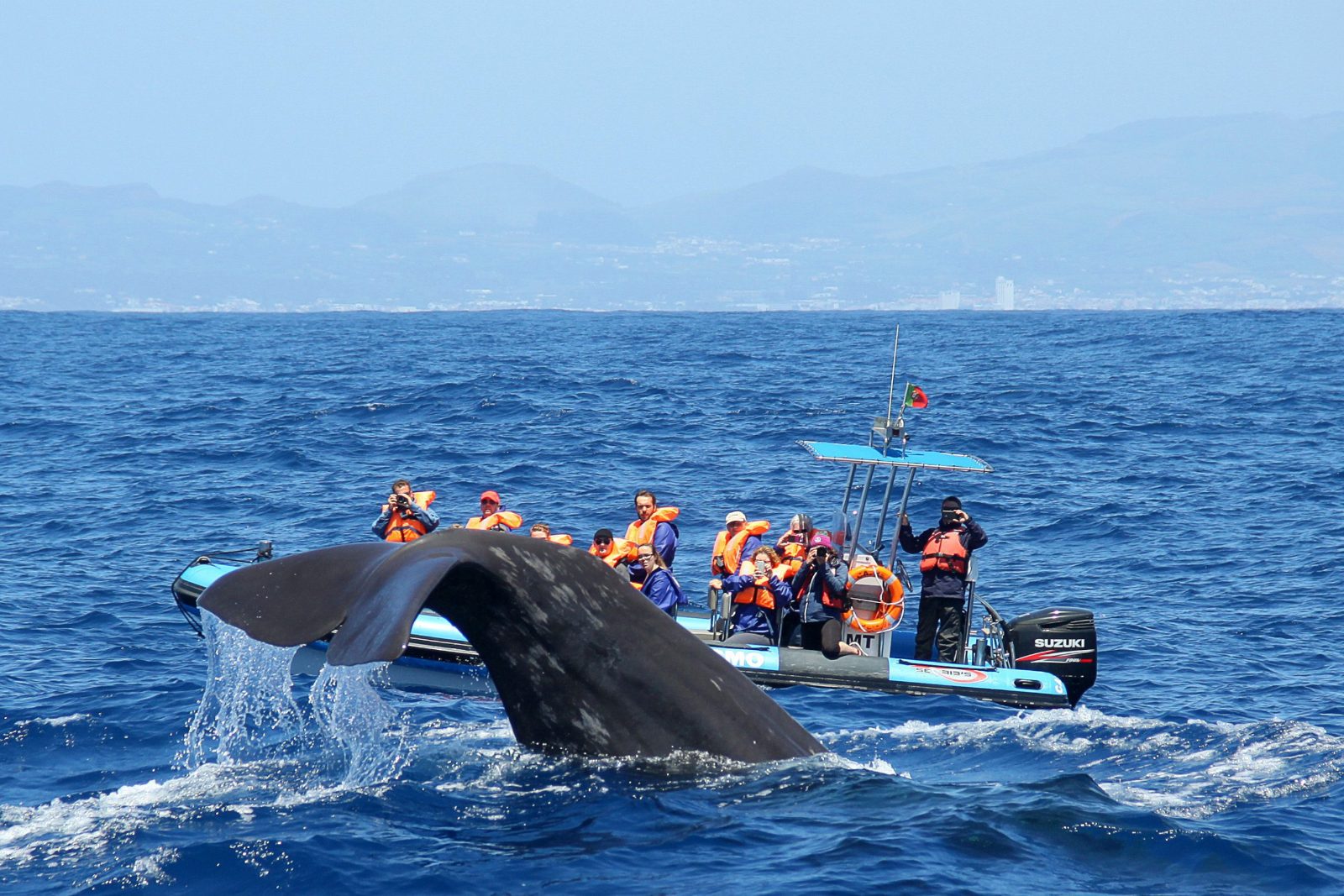
The archipelago records more cetacean species than any other location in Europe, a consequence of its position 1,500 kilometers west of mainland Portugal where three major ocean currents converge. Deep submarine canyons drop to 3,000 meters just offshore, creating nutrient upwellings that sustain a complex marine food chain from squid to the largest mammals on Earth. Sperm whales dominate sightings across all twelve months, with male individuals and maternal groups hunting in the deep channels between islands. These toothed whales dive for 40 to 60 minutes, surfacing to breathe in predictable patterns that experienced spotters track from clifftop lookouts using techniques inherited from 19th-century whaling stations. Spring brings the baleen whale migration: blue whales, the largest animals ever to exist, pass northward in April and May, while fin whales and sei whales follow slightly later routes. Summer months offer the calmest Atlantic conditions and the highest concentration of dolphin pods, particularly common dolphins in groups of 100 or more. Autumn and winter reduce tour frequency due to rougher seas, but sperm whales, pilot whales, and resident dolphin species remain active. Tour operators in the azores whale watching season maintain daily departures from São Miguel, Pico, and Faial, with morning slots between 08:00 and 10:00 preferred for calmer water and better light. Sightings are never guaranteed, though multi-species encounters occur on roughly 80% of summer departures. Operators use a network of land-based spotters communicating by radio to direct boats toward recent surfacing locations, a system that distinguishes Azorean whale watching from most other Atlantic operations. The archipelago's marine protected areas prohibit close approach within 50 meters for most species and 100 meters for mothers with calves, regulations enforced by the regional government and respected by certified operators. Hydrophones on many tours allow passengers to hear sperm whale echolocation clicks during deep dives, adding an acoustic dimension to visual sightings. No feeding or baiting occurs, and encounters depend entirely on natural cetacean behavior in open ocean conditions.
“The archipelago records more cetacean species than any other location in Europe, a consequence of its position where three major ocean currents converge.”
The Azores Whale Watching Season: Seasonal and Daily Timing
The primary whale watching season in the Azores spans from April to October, with spring serving as the peak migration period for large baleen whales. For daily excursions, the best arrival window is 08:00–17:00, as morning and early afternoon departures offer better sea conditions and visibility.
April to June
ModerateCooler, 16°C-20°C; unstable seas
Blue, fin, and sei whales migrate through these waters during this period. It is the peak time for observing large baleen species.
July to September
HighWarm, 22°C-26°C; calmer seas
Warmer temperatures bring resident sperm whales and various dolphin species. These months offer the most stable maritime conditions.
Morning/Early Afternoon
Peak—
Sea conditions and visibility are generally superior during these hours. Calm waters increase the likelihood of successful sightings compared to late afternoon.
Verdict: The optimal time for whale watching is between April and September, specifically targeting morning or early afternoon departures to maximize calm sea conditions.
Operational Hours for Azores Whale Watching Season Tours
Operator offices and coordination centers across the Azores Archipelago remain open daily to assist with tour logistics and information.
| Monday | 08:00–18:00 | |
|---|---|---|
| Tuesday | 08:00–18:00 | |
| Wednesday | 08:00–18:00 | |
| Thursday | 08:00–18:00 | |
| Friday | 08:00–18:00 | |
| Saturday | 08:00–18:00 | |
| Sunday | 08:00–18:00 |
Pricing and Fees During the Azores Whale Watching Season
Access to whale watching operator offices in the Azores is free of charge. Costs for maritime excursions vary based on the specific tour provider, vessel type, and duration.
There is no fee to enter operator offices, while actual tour prices depend on the selected boat operator and excursion package.
Essential Checklist for Your Azores Whale Watching Season Trip
Book your tour slot in advance and prepare gear suited to open-ocean conditions.
-
Book your whale watching tour online
-
Operators fill slots quickly during peak spring and summer months, especially for morning departures.
-
Bring valid photo identification
-
Tour operators require ID verification at check-in for all passengers before boarding.
-
Pack waterproof or water-resistant clothing
-
Ocean spray and wind are common on open-water trips regardless of weather forecasts.
-
Wear closed-toe non-slip footwear
-
Boat decks become slippery from seawater and require stable shoes for safe movement.
-
Apply motion sickness prevention if needed
-
Multi-hour trips on Atlantic swells can trigger seasickness even in calm conditions.
-
Carry sun protection and sunglasses
-
UV exposure increases significantly on the water with reflection from the ocean surface.
-
Arrive 15 minutes before departure time
-
Check-in, safety briefings, and boarding procedures run before each scheduled tour slot.
Wildlife Facts About the Azores Whale Watching Season
The Azores archipelago serves as a significant biological corridor for marine mammals, hosting both resident populations and migratory species. Understanding these species provides context for the biodiversity encountered during maritime expeditions.
28 recorded species
The Azores waters host more than one-third of the world's total cetacean species, including baleen and toothed whales.
Sperm whale residency
Physeter macrocephalus, the sperm whale, remains in the archipelago year-round due to the deep-water trenches surrounding the islands.
Blue whale seasonal migration
As the largest animal on Earth, the blue whale typically passes through these waters during the spring migration season.
Deep-sea squid diet
Sperm whales dive to depths exceeding 1,000 meters to hunt for giant and colossal squid in the volcanic canyons.
Common dolphin social structures
The short-beaked common dolphin is frequently observed in large pods, often interacting with other cetacean species while hunting.
Beaked whale deep-sea habitat
Various species of beaked whales inhabit the deep offshore waters, making them some of the most elusive cetaceans in the region.
Sei whale feeding behavior
Migratory sei whales are often spotted in the Azores during late spring when they utilize the nutrient-rich waters for feeding.
Risso's dolphin characteristics
Easily identified by the extensive scarring on their bodies, Risso's dolphins are a common resident species found in the deep waters near the islands.
Check availability
Frequently asked questions about azores whale watching season
Everything you need to know about azores whale watching season