

Quick answer
Half-day whale watching tours in the Azores start at 65 EUR per adult, with prices varying by operator, boat type, and season. That baseline rate typically includes marine biologist commentary, safety equipment, and a three-hour Atlantic voyage departing from Ponta Delgada. Peak summer months (June through August) can push rates 15 to 20 percent higher, while shoulder-season departures in April, May, and October often carry discounts for early booking.
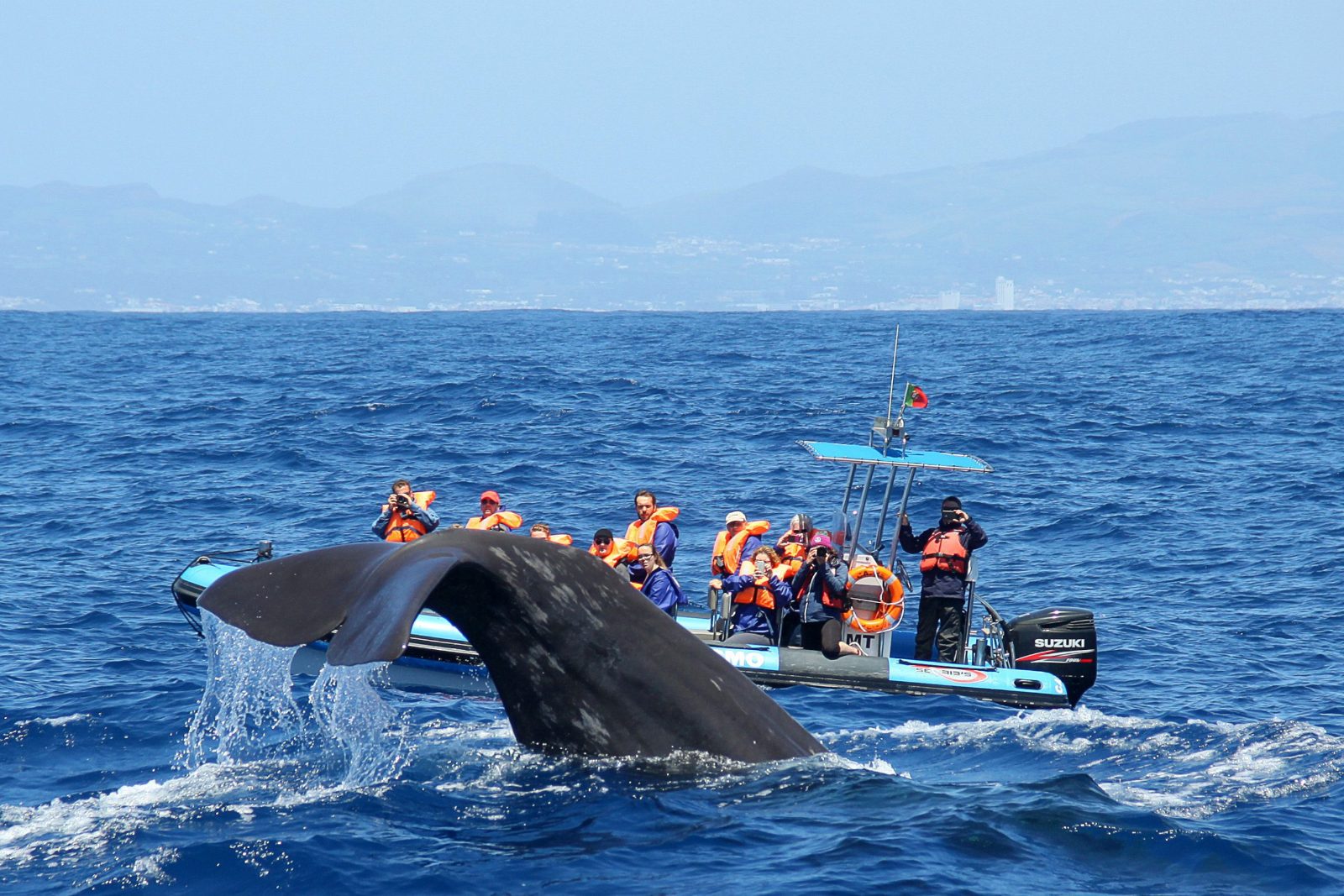
Twenty-eight species of cetaceans pass through Azorean waters, and the archipelago's position along the Mid-Atlantic Ridge makes it one of the few year-round whale watching destinations in Europe. That ecological advantage shapes the local pricing structure: operators compete less on whale sightings than on vessel comfort, group size, and the expertise of onboard naturalists. The azores whale watching price guide reflects three boat categories. Rigid inflatable boats (RIBs) seat twelve to fifteen passengers, prioritize speed and close-range encounters, and anchor the 65 EUR baseline. Semi-rigid catamarans offer sheltered seating for thirty to forty guests, indoor observation lounges, and restroom facilities, with fares ranging from 75 to 85 EUR. Full-day expeditions aboard larger research vessels, which venture to offshore seamounts and include lunch service, command 120 to 150 EUR. All registered operators include life jackets, waterproof gear, and spotter coordination via radio link to shore-based lookout posts—a legacy of the islands' historic whaling network, now repurposed for conservation. Cost for whale tours in the Azores shifts with migration patterns. Sperm whales reside year-round, but blue whales and fin whales transit only in spring, when demand (and fares) spike. Late autumn sailings drop to 55 EUR on weekdays, though sea conditions grow rougher and sighting windows shrink. Group bookings of six or more unlock tiered discounts, and children under twelve typically pay half the adult rate. Some operators bundle underwater hydrophone listening or drone footage for an additional 10 to 15 EUR, though regulations cap drone altitude and restrict close approaches to protect calving grounds. Payment terms favor direct booking over aggregator platforms, which add commission margins of 10 to 18 percent. Most marinas accept card and cash, and cancellations made forty-eight hours ahead receive full refunds—critical in an archipelago where weather can scrub departures with little notice. The best value sits in May and late September, when sperm whale pods are active, sea surface temperatures climb above 18°C, and azores whale watching price levels dip below summer peaks while maintaining near-daily departure schedules.
“The baseline rate typically includes marine biologist commentary, safety equipment, and a three-hour Atlantic voyage departing from Ponta Delgada.”
Daily Schedule for Azores Whale Watching Price and Departures
Whale watching operations in the Azores maintain consistent daily hours throughout the week to accommodate various tour schedules. These times apply to standard departures from the marina.
| Monday | 08:30–18:00 | |
|---|---|---|
| Tuesday | 08:30–18:00 | |
| Wednesday | 08:30–18:00 | |
| Thursday | 08:30–18:00 | |
| Friday | 08:30–18:00 | |
| Saturday | 08:30–18:00 | |
| Sunday | 08:30–18:00 |
Best Timing for Your Azores Whale Watching Price Investment
The best arrival window for whale watching is 08:30–13:30, as morning and early afternoon departures consistently provide optimal lighting and the calmest sea conditions. Planning your trip within this timeframe increases the likelihood of smooth coastal navigation and clear visibility.
April to June
Moderate visitor volumeMild, 16°C to 20°C
Large baleen whales are frequently present. This is a primary season for sightings.
July to September
High visitor volumeWarm, 20°C to 25°C
Resident sperm whales are reliably sighted. Sea states remain generally calm.
October to December
Low visitor volumeCooler, 15°C to 19°C
Migratory patterns shift, offering different species. Fewer crowds are present on the water.
Weekday mornings
Low crowd density—
Optimal lighting and the calmest sea conditions occur during these early departures.
Verdict: For the best balance of calm seas and visibility, aim for weekday mornings between April and June.
Arrival at the Marina for Azores Whale Watching Price Tours
Whale watching tours depart from Marina Pêro de Teive in Ponta Delgada. The marina is located centrally along the southern coast of São Miguel Island and is easily accessible by car or on foot from the city center.
Follow signs for Ponta Delgada harbor and Marina Pêro de Teive
Walk towards the main harbor area of Ponta Delgada
Request drop-off at Marina Pêro de Teive
Preparation Checklist for Azores Whale Watching Price Tours
Prepare these essentials to ensure a comfortable and successful whale watching experience.
-
Book your tour in advance — Operators fill quickly during peak season, especially morning departures.
-
Bring motion sickness medication — Atlantic swells can be significant even on calm days.
-
Wear layered, waterproof clothing — Temperatures drop on the water and sea spray is common.
-
Pack sunscreen and sunglasses — UV exposure is intense on open water with minimal shade.
-
Arrive 15 minutes before departure — Check-in and safety briefings are mandatory before boarding.
-
Charge your camera or phone — Whale encounters are brief and lighting conditions change rapidly.
Check availability
Frequently asked questions about azores whale watching price
Everything you need to know about azores whale watching price